Employment Law 2021: Changes You Need to Know About

Most business owners are currently distracted by Coronavirus and ensuring they manage the needs of their staff working remotely. There are a lot of things to consider. However, there will be changes to the employment law 2021, and it is important to be aware of these. You will need to put measures in place to ensure your business is complying with these. These are some of the changes to the employment law 2021.

National Minimum Wage and National Living Wage

Employees aged 23 and over (current age is 25 and over) will be entitled to the National Living Wage from the 1st of April 2021. The rate will increase from £8.72 to £8.91. You must pay any employees aged 23 and over an hourly rate of £8.91. The National Minimum Wage will also increase for all other age groups. Employees aged 21-22 will be entitled to an hourly rate of £8.36, employees aged 18-20 will be entitled to £6.56 per hour, under 18’s will be £4.62 and apprentice level will be entitled to £4.30 per hour. You must update your payroll records in plenty of time before this legislation takes effect.

IR35 Changes for Private Sector

The IR35 changes were postponed during the Coronavirus pandemic, and they will now apply from 6th April 2021. Employers should ensure that they are complying with the IR35 regulations. It means reviewing your current contracts to determine whether contractors sit outside IR35 or inside IR35. Working inside IR35 means that a worker is working as if they are employed; rather than self-employed. It means that, as a business, you will have more tax to pay. If you want to ensure any of your workers remain outside IR35, you should update any contracts to reflect the difference. For instance:

  • The contract should state that the contractor can be substituted at any time if necessary. The contract should not have set and breaks and lunches.
  • The worker should not need to request holidays; they should only be informing you about a holiday.

These are just a couple of areas to look at but the full contract will need to be analysed to represent a self employed worker.

If the contract states that the contractor is working in the same way as employees; and under the same regulations and restrictions, you will have trouble proving that they are outside IR35.

Redundancy Pay Limits

The employment law 2021 states changes to limits on statutory redundancy pay from the 6th of April 2021. The limit will be £544 per week, and you must update your systems to reflect this important change.

Other Statutory Increases

The weekly statutory rates will increase for maternity, adoption, paternity, bereavement, and shared parental from 4th April 2021. This figure will be £151.97. Statutory sick pay will also increase to £96.35 on the 6th of April 2021. You must ensure your policies and systems are updated to reflect these changes.

Settled Status

You should be mindful of the settled status that may affect EEA residents. According to the new employment regulations since Brexit, residents within the EEA, living in the UK, will need to apply for pre-settled or settled status, under the EU settlement scheme. They must do this by 30 June 2021. It is a straightforward process, and you should ensure all your employees have completed this on time.

If you want further clarification on the UK employment law 2021 or if you have any other HR issues, you can email melanie@bluetreehr.uk or call 07516 335 419.

Tips for Managing Staff Working Remotely

The Coronavirus pandemic has forced many businesses to work remotely, and this is a trend that is likely to continue, even when normality resumes. Many business owners don’t feel the need to return to the office. Some simply can’t afford to run an office anymore.

It can be daunting to try and manage a remote workforce and ensure you are doing it well. It is entirely possible to manage those undertaking remote jobs, just as well as your employees based on site. These are some helpful tips for managing remote staff.

Offer Reassurance

The COVID-19 pandemic has been a difficult time for everyone. Some people have lost loved ones or faced other hardships. Everyone has had a hard time in some respect, and employees need to feel reassured; more than ever. It can be as simple as just checking in with them daily to ask how they are and if they need anything. A quick call or text is a simple act, that can make a massive impact. Employees need to know that they are valued and always supported.

Provide Equipment

Not everyone has the means to buy a laptop or PC, and employees should not need to use their equipment for work purposes. Make sure your employees have everything they need, including a comfortable chair, laptop, and phone. They may also need access to a camera if they will be involved in online calls. It is also worth creating a remote working policy, so that employees understand what the expectations are.

Encourage Self-Management

It can be challenging not to have visibility of your employees. Realistically, you don’t know if they are working or out shopping! Trust is vital. Do not micromanage your employees, as this will make them feel demoralised. It may be beneficial to focus on productivity rather than strict working hours. If your employees get their work done and are available at vital times, it shouldn’t matter if they take a longer than usual lunch break or pop out during the day for a quick shopping trip. Greater flexibility is one of the remote working advantages.

Recognise Employees

Recognise employees who are doing well during a difficult period. You don’t need to give them money or a promotion; a simple thanks can be sufficient or even consider buying them some lunch. Employees who are recognised will be more loyal to your company and will feel better overall.

Incorporate Social Time

In the workplace, there is usually a good mix of both work and social time. It is worth encouraging this for employees working remotely. It can be as simple as an online quiz, having an online lunch together, or just a general catch-up. With so many people working on their own and not seeing their friends and family, you must do all you can to ensure social time is high on the priority.

If you need HR services Essex or throughout the UK, including any issues you may be having with remote working, get in touch, we will be happy to help manage these for you.

5 Ways to Improve Your Skills During Lockdown

If you are currently on furlough or out of work, you may be fed up with Netflix or going for endless walks. The novelty soon wears off. With all the free time you have at your disposal, it is a great time to explore new opportunities and learn new skills. There are endless benefits to upgrading your skills. It gives you the chance to broaden your career prospects, and it helps keep your mind active. It can also boost your mental wellbeing. You may even be able to make some money from it. These are some ways to improve your skills; without it being a financial burden.

Networking and Events

Networking can improve your mental health, while also learning from others. It is particularly beneficial now when many of us are having little communication with our loved ones. There are platforms like Eventbrite, where you can find a range of different events and networking opportunities. Some are free, while others have a small fee. You may also find some other events by looking at your local government website.

Courses 

We tend to think that any courses we sign up to will be expensive, but there are many free options. The Open University has a wide range of free courses; including history and the arts, health, sports, and psychology, and science. If you are considering a career change or want to enhance your knowledge, there are plenty of options to consider. Other platforms such as Udemy also offer free courses. 

Learn a Language

There’s no excuse to put off learning a language now. Learning languages can improve your career opportunities. It can also allow you to engage with a network of different people. Learning languages is interesting and challenging. There are free language courses on the Open University website (link above), and a quick google search will take you to other resources. You can also get one-to-one tuition from a platform such as Babbel.

Government Courses

The government has resources available for those who want to learn new skills. Some courses are free, including Future LearnBusiness Gateway (Scotland only), and The Skills Toolkit. Take advantage of every free skills resource you can, as this may change when things return to normality.

Hobbies and Interests

If there’s something you’ve always wanted to do but haven’t had the time, now is the ideal opportunity. You never know, you might be able to make money from your hobby. YouTube is a useful resource for getting access to tutorials.

How to Ensure Successful Onboarding of Staff who are Working Remotely

The recent Coronavirus pandemic has changed the way many businesses work, with most office workers being encouraged to work from home. According the Office for National Statistics, 86% of those who were working from home in some capacity, did so as a result of the COVID-19. Even when the pandemic comes to an end, many businesses will either be forced or choose to operate on a remote or semi-remote basis. For many, the pandemic has been an eye-opener to how business owners can utilise the skills of people from across the globe. In many cases, there is no real need to work together in an office. The same work can be completed efficiently with remote workers.

The obstacle in all of this is the recruitment and on-boarding of new recruits. How do you onboard new staff without ever meeting them face to face? Is it even possible?

It is possible, but you need to be prepared to alter your current onboarding strategy to adapt it to the remote worker while ensuring they feel welcome and part of the community. These are some tips for the successful onboarding of remote staff.

Develop a Plan

Starting a new job is nerve-wracking enough, but the thought of working remotely can make it feel even more stressful. To ensure new recruits are not worrying about the impending start date, make sure you develop a plan and send it to them at least a few days before they start. The onboarding process should not last a day or two, it should last at least two weeks. This gives the recruit ample time for training, learning the ropes, and settling in. The plan should include what they will do each day, including training, meetings, etc. Do not make the first two weeks heavy for the new start, go easy on them. There is a lot of information to absorb, and you want to ensure they return the next day!

Set Expectations

This is one of the difficulties of remote working and the aspect that business owners find the most difficult to manage. How do you set expectations when you are not in the office together? Consider the following:

What time should their shift commence? If it’s 9 am, for instance, do you want them to be logged in and ready for 9 or do you expect them to start logging in at 9? It may seem pedantic, but it is important to cover your exact requirements with any new starts.

When is the lunch break? Advise them how long they have for lunch and when they should take it. If you don’t have a set time, inform them of this. Do they need to let anyone before logging off or can they suit themselves?

Do you have targets? If you have set targets you expect them to achieve each day, let them know what these are.

Can they work flexibly? What is the general culture of the company? Do you expect them to work rigid hours or are you flexible if the targets are achieved? Some businesses require workers to be at their desk and available during normal working hours, while others don’t care if you work at 4 in the morning if you do the work! It may even be beneficial if you are a global company.

What is the culture? As you are not working face to face, it can be difficult for new starts to get a feel for the culture, so it’s worth giving them some information on this. For example, it may be quite a chatty, relaxed environment or it could be a head down, get on with the work culture. They must understand how they are expected to operate within the business.

Provide Equipment

You should always ensure that the new start has all the necessary equipment. Don’t just assume they have broadband or a laptop. If you are hiring a permanent employee, you should always supply them with a computer/laptop, etc. Not only is this better for the security of files and documents, but they shouldn’t have to use their equipment for work purposes. Also, consider any stationery they may need and a comfortable chair.

Regular Communication

Communication is the most important part of the onboarding process. You don’t have the luxury of speaking to the recruit whenever you want, and it can be easy for people to feel isolated when they are working alone. Make sure you speak to the new start daily during the onboarding process and check that they are getting on well. Find out if they have any questions or concerns. It is a good idea to set up instant messaging or a forum so that employees can get help with any questions they have, quickly and easily. Making your new start feel welcome and part of the company from day one is imperative for successful onboarding.

You can find out more about our HR services, or feel free to contact us for an initial discussion.

Tips for Being Productive When Working from Home

It goes without saying that working from home has a lot of perks. You don’t need to tackle the traffic, stick to a rigid routine or take your breaks at certain times. It can also save you a lot of money, as you don’t need to pay for travel, and you are less likely to nip to the shop for your lunch. However, it does come with its downsides. It can be difficult to treat your days like a normal ‘day in the office’, and consequently, your productivity can plummet.

There are ways to avoid this though, and these are some of our top tips for being productive when working at home.

Work in Short Bursts

When you are working from home, you have the luxury of being able to set your own pace, and even if you have set hours you need to be available, you don’t need to be as rigid with your day. You’ll find that if you work in short bursts, it will be far more effective than trying to work for hours at a time. You may want to set a schedule to work for sets of two hours and take short breaks in-between.

Reduce Social Media

Social media can offer a lot of benefits, but it can also be extremely distracting. You might log on to quickly check your notifications, and before you know it, an hour has passed and all you’ve done is scrolled through content. There is nothing wrong with using social media, but set specific time to use it, otherwise you could lose a lot of time out of your day. Log out of your accounts if it helps or delete the app from your phone.

Set a Routine

Make sure you have a routine set for the day when you are working from home, and one which isn’t too demanding. If you don’t like mornings, make sure you spend the morning on the tasks you enjoy the most and those which don’t take too much brain activity. For example, responding to emails and arranging meetings. Your routine should include your scheduled hours, breaks and you can incorporate your scheduled time for checking social media.

Listen to Music or Podcasts

It’s amazing how important music can be for lift your spirits and making you more productive. If you find it difficult to work with music on, then you can maybe listen to it when you are doing your admin tasks. Podcasts can also be enjoyable, and particularly those which are positive and uplifting.

Manage Expectations

One of the difficulties of working from home is that you may have the day-to-day distractions that your family can bring. Make sure you manage your expectations by setting boundaries. Work in your own quiet space and set times where you don’t want to be distracted. If you have young children at home, try to get into a routine where you work while they are sleeping or give them some things to do while you work. If you have video meetings to attend, make sure you have your own quiet space to undertake them.

Communicate with Others

Although you are working from home, it is not a good idea to get into a routine where you don’t speak to anyone all day. This particularly important if you live on your own. It may be colleagues, clients or you could even arrange to join in networking meetings during your breaks.

If you are working from home and need advice on any issues you are facing at work, get in touch with us to discuss our HR services on 01787 695 084 or email melanie@bluetreehr.uk.

Blue Tree HR is Green.

Blue Tree HR Solutions are really keen to be environmentally friendly. As the name suggests… we love Trees! For this reason, Blue Tree HR is Green. We have been doing our bit to try and save the planet since the beginning.

We believe it is important that we consider our effect on the environment. Global warming, deforestation, melting polar ice-caps and the resulting endangered species. This list of environmental impacts is endless and it is hard to know what to do.

In reality, we are a small business and we appreciate that we can’t really make a big impact, but doing something is better than nothing.

CO2 Neutral

We registered with Tree-Nation in October 2018. We have been paying to have trees planted in various projects across the world.

It’s something we are very proud to be part of.

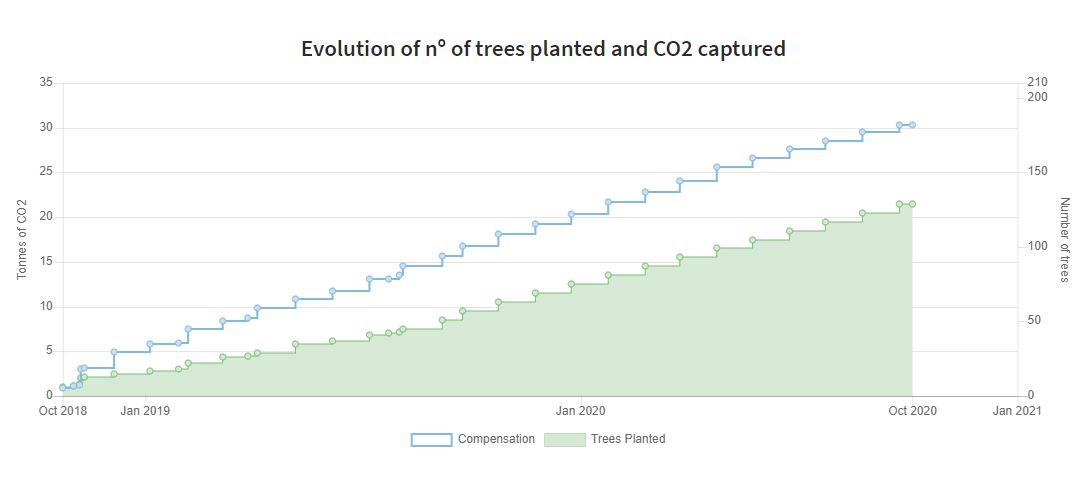
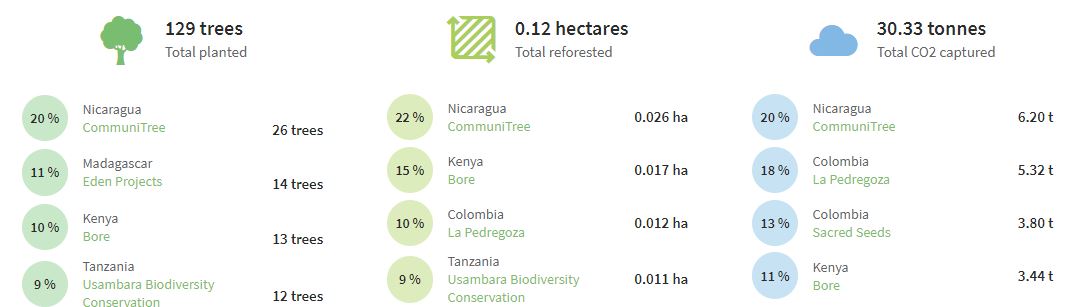
Blue Tree HR Solutions committed to being a carbon-neutral company in 2018 and sponsor trees to be planted around the world. For two years we have been off-setting at least 1 tonne of CO2 per month. As a result, we have had 129 trees around the world. And, we adding to this number every month. As the business grows we plan to increase how much we offset. So we remain carbon neutral.

The graph shows the purchase of trees each month to offset CO2 emissions

Projects such as planting indigenous trees and plants deep in the heart of the Peruvian Amazon. The Camino Verde project is dedicated to protecting and understanding biodiversity. Also, protecting indigenous rights, autonomy, and wisdom. Resulting in sustainable ways of life and encouraging fair, sustainable development. It’s inspirational stuff!

Different trees are planted for different reasons. For example to provide food or to support wildlife, or maybe generate an income.
The project plants trees all over the world in various replantation projects, many areas have been affected by floods, fire or ongoing deforestation.

Reducing our Travel

Another way that Blue Tree HR is Green, is by reducing our fuel consumption. One of our clients required us to fly to Dublin on a regular basis, this is clearly not very environmentally friendly. I have persuaded them to use video calls instead. This is much better for the environment and actually much more time-efficient. The client thought that having face to face meetings was important. This may be true in some circumstances, but it is not necessary for every meeting.

Reducing waste

We have considered our waste output and as a result we:

  • avoid printing documents wherever possible
  • use recycled paper and pens
  • recycle our paper, printer cartridges and batteries
  • avoid using paper cups at meetings
  • always carry our own water bottles to reduce unnecessary single-use plastic.

Helping Endangered Species

For a couple of years we have been sponsoring an Orangutan via the WWF (World Wildlife Fund). Such amazing animals with a desperate plight.

#fightforyourworld

Approx. 3000 Orangutans are killed every year.

We are looking to find other ways to support wildlife and sustainablity projects across the world. Aspiring to help businesses who are not as fortunate as we are in the UK. We have some ideas, so watch this space!

Other ideas? Ideally, we would have a solar powered company car and visit clients in an eco-friendly fashion. Maybe one day?

Gold breatheHR Partner

We are really pleased to have been promoted to Gold breatheHR partner status.

breatheHR is a great software tool. It’s great to see so many of our clients using it to manage all the day to day admin that comes with managing employees.

Due to social distancing rules in place, we celebrated via a zoom call with Bethan from breatheHR headquarters. Bethan had the balloons and Melanie had the party poppers!

https://www.linkedin.com/posts/melanie-knight-7773048b_bhrpartner-goingforgold-mondaymorningmotivation-activity-6696033514250350592-gKCr

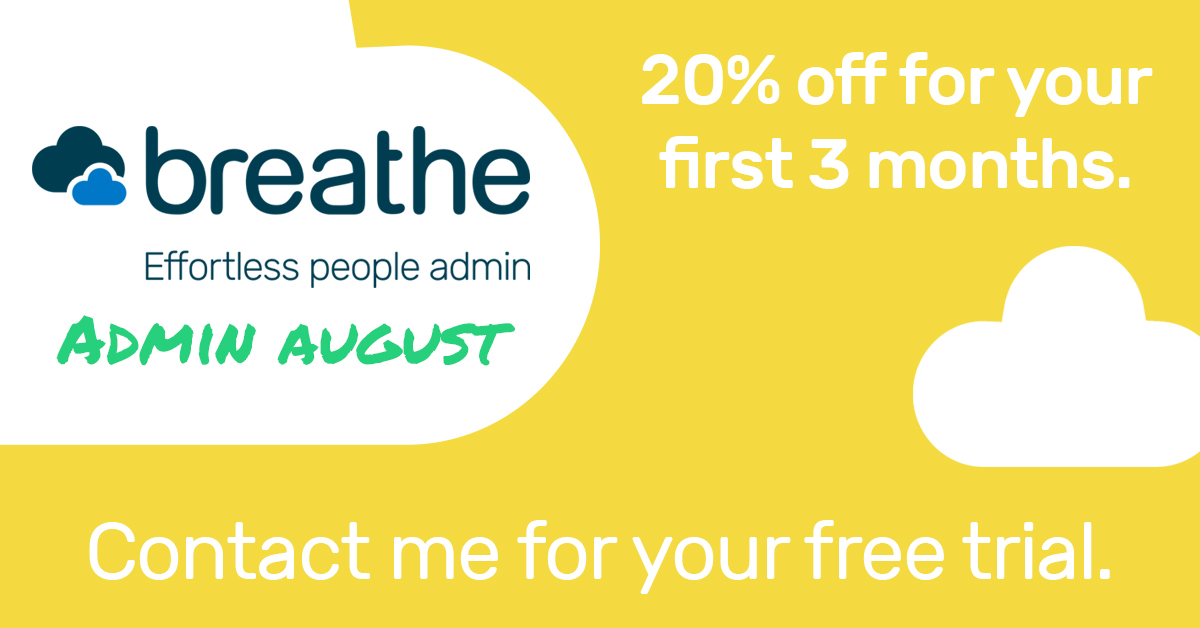
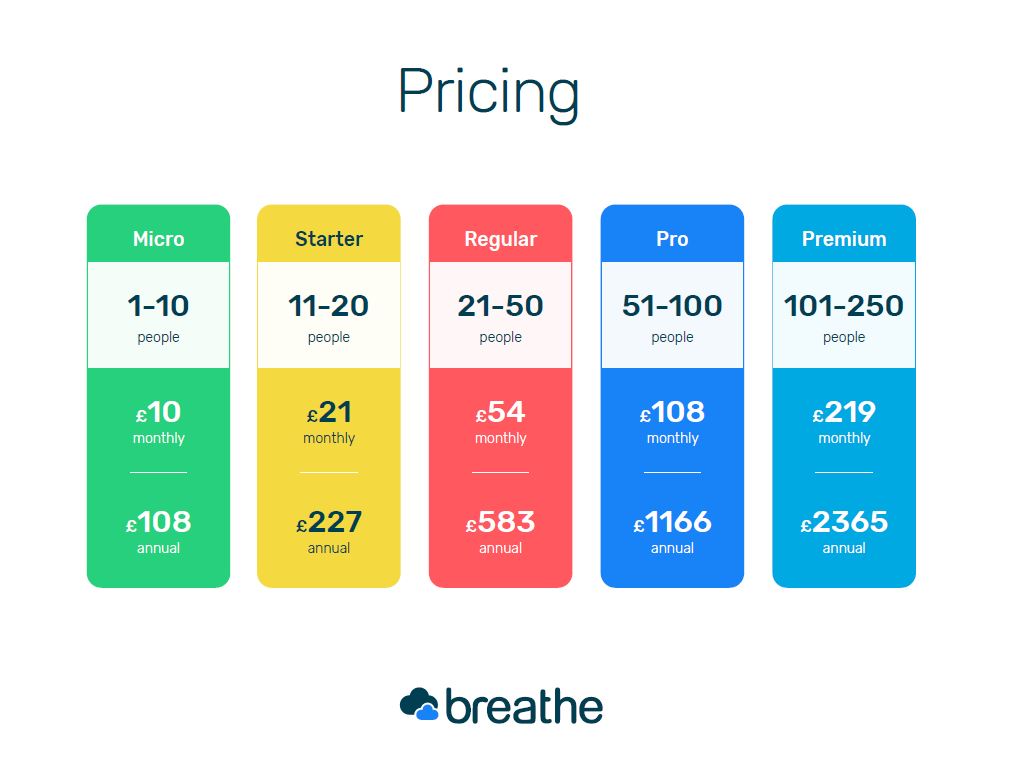
This month we are offering a special deal for anyone new to breatheHR. 20% discount for three months following your free trial during August.

I recommend any business with employees to sign up to breatheHR, it will save you so much time and paper and the price is a no-brainer 😁

You can pay monthly or annually.

If you would like a demo of breatheHR – we can set you up with a free demo account, for you to try before you buy.

https://bluetreehrsolutions.co.uk/hr-software/
See more info here.

Get in touch for more info

Life as an HR Consultant during a pandemic.

Life as an HR consultant over the last 4 months of the pandemic has been an ‘interesting time’! 

In early March before the lockdown began business owners were understandably worried.  We could all see what was going on in China and other parts of Europe on the news and knew it was inevitably going to affect us here in the UK.

The advice given: wash hands for at least 20 seconds

First, we started looking at options. What would we do in a lockdown situation?  What if we can’t work and I won’t be able to afford to pay my staff? 

Lay-off Clause

All of my clients have contracts which include a lay-off clause – so this was our starting point.  Ideally, nobody wants to do this.  It’s in the contract but it really is a route nobody wants to use for any length of time.

Put simply, it allows employers to send staff home when there is no work. The only pay they will receive is a statutory guaranteed payment which is £30 per day for a maximum of five days in a three month period.  That’s a total of £150.00 in three months!

Many businesses closed due to the pandemic during March.

We were all in the dark as to how long the Coronavirus pandemic would continue and that dreaded word kept cropping up ‘unprecedented’!  No employer wanted to tell their staff –“go home, you will get £150.00 and hopefully, you can come back soon”, with the alternative being to pay the staff without any revenue there wasn’t really a choice.  It was quite frightening.

I started preparing letters but advised clients to hold fire with sending them out.  There were whisperings that the government was going to help in some way.

20th March 2020 the government announces the Coronavirus Job Retention Scheme.

https://www.gov.uk/government/publications/coronavirus-job-retention-scheme-step-by-step-guide-for-employers

The 20th March 2020 the government announced the Coronavirus Job Retention scheme.  Typically announcing it on a Friday at 5pm!  Monday morning my phone started ringing at 7am.  Everyone needed to know what they had to do.

Working alongside lots of other HR consultants and got involved in various HR consultants’ forums to consider what was going on.  Everyone was having to figure things out as we were drip-fed the legislation.

But what a relief! 

Everyone breathed a huge sigh of relief; Businesses saved overnight. Employers could sleep at night knowing their employees were going to continue to receive some pay when the business was shut down.

I know of business owners literally crying they were so happy; people already been made redundant were called and offered their jobs back.

Furlough

That seems like a long time ago now and furlough has become a word used more than any other in HR circles.  How we furlough, who we furlough, what can happen during furlough?

Legislation has continued to evolve and overall, I think it has been a great scheme.  There have been some downsides, but people receiving 80% pay whilst not being able to go anywhere and spend their money have mostly been quite happy.  People who earn over £30k per year have been harder hit as the cap was at £2,500 per month. On the whole it had the desired effect.  People stayed at home.

23rd March 2020 – “Stay At Home”

After the announcement on the 23rd March advising everyone to stay at home – about 80% of the employers I work with furloughed their staff. Constructions sites could continue to work, but within a week they could not get access to resources. Inevitably, staff continued to be furloughed into April when everything had come to a standstill.

Keyworkers were not furloughed and continued to work through lockdown.

Since then, I have been advising clients on the changes to the furlough scheme and planning ways of bringing employees back to the workplace or helping them manage staff who are home-working. I also became an NHS volunteer and have been helping people in need – delivering food, collecting prescriptions, and ringing up people who are lonely and need a chat.

Changes to Business

In May the redundancies started. 

Many businesses affected by the pandemic have had to make big changes and the lockdown period has given employers time to consider the most economic way of running effectively.

Unfortunately, this often means job losses.  Again, the HR forums are busy, this time managing redundancies is now commonplace and every HR consultant I know, is dealing with various redundancy situations.

Working with employers to try and avoid redundancies has been the majority of my workload through June, with the job retention scheme making it cost effective to put staff on notice during their furlough, businesses realize it is better to make these decisions now instead of later.

Flexible furlough scheme

Social distancing with anyone who does not live in your household

The flexible furlough scheme came into effect on the 1st July 2020 and this really is a good scheme. I personally think it would have been better if it had been introduced earlier. However, I appreciate the government had to make some quick decisions back in March.

This new improved scheme allows staff to work for the business on a part-time basis or shorter hours. Employers can choose: a week on/ week off or shorter days or a couple of hours a week.  Any arrangement that works for the business.  It helps with the gradual return back to work.

The Job retention Scheme Grant pays 80% of the wages for the time the employees are not working.  I have been kept me busy making sure the correct agreements with employees are in place. And ensuring employers understand what they can and can’t do.

The new ‘Normal’

It feels as though we are through the worst of the pandemic. Many businesses are back at work with the majority of their staff working. 

The way we all work has changed – with alternating shift patterns, one way systems, lots of home working, so many video calls and hand santizer literally everywhere. There are high cases of people suffering from various mental health issues which is a big issue for workplaces and a worrying outcome of the pandemic and lockdown.

We are all trying to keep a distance from each other and panic ensues every time we hear someone cough. But there seems to be some hope… people are getting on with life and employees mostly are happy to get back to some kind of normality.

We are midway through July and I wonder what the future holds.  One thing is for sure if ever there was a time for businesses to need HR support it is 2020.

If you are in need of HR support please get in touch- we give fifteen minutes of free advice to anyone who calls and are happy to answer your questions.


Furlough – FAQs

The Job Retention Scheme, recently proposed by the government is great news for employers. Business owners were wondering how they were going to cope during the Coronavirus (Covid-19) pandemic.

The Job Retention Scheme

Image of graphic person with a speech bubble
What is the Job Retention Scheme?

With the Job Retention Scheme, employers can put their employees on furlough. This is a temporary lay-off, meaning as soon as there is work available again staff can be asked to return to work as before.

The Government has confirmed it will provide grants to businesses. This will cover 80% of wage costs to a maximum of £2,500 per person per month.


So if you are wondering if this Job Retention Scheme could help you, I have answered a few of the frequently asked questions below:

Can I furlough part-time workers?

Yes. In fact, you can furlough all types of workers part-time, full time, employed agency, zero hours, variable hours. They will all be entitled to the Job Retention Scheme grant.

What is someone is on sick leave?

When someone is on sick leave they will continue to receive sick pay in accordance with their employment terms and conditions. If they are due to return, you can initiate a period of furlough on their return date.

Can I have rotate staff on furlough leave?

You can, but the minimum period for qualifying is three weeks, so you will need to rotate on a three-week cycle, any less and you will not receive the grant.

Can staff do a small amount of work for me whilst on a furlough period?

The government guidance stipulates that anyone on furlough is not permitted to carry out work for their employer or anyone else.

What if my employee has more than one job?

Employees who currently have more than one employer can be put on furlough by one employer and continue to work for the other. If they are put on furlough by more than one employer, they’ll receive separate payments from each employer. The 80% of their normal wage up to a £2,500 monthly cap applies to each job.

What if someone is on maternity leave?

An employee on maternity leave will continue to receive their maternity pay as before, no change. If they are due to start their maternity leave soon, they can be put on furlough, until the maternity leave starts. NOTE: If their earnings have reduced due to a period on furlough their Maternity Leave starting this may affect their Statutory Maternity Pay.

If someone is due to come back to work following maternity leave, you can initiate a period of furlough instead of returning to work.

I had a new recruit who started on during March, do they qualify?

Employers can only claim for staff who were employed on the 28th February and new starters since then do not qualify for the grant.

What about National Minimum wage?

Pay on furlough does not have to meet the national minimum wage because they are not being paid to work.

How is the 80% payment calculated?

For full time and part-time salaried employees, the employee’s actual salary before tax, as of 28 February should be used to calculate the 80%. Fees, commission and bonuses should not be included.

In the case of employees with variable pay, who have been employed for a full year, employers will claim for the higher of either: the amount the employee earned in the same month last year, or an average of their monthly earnings from the last year.

For staff on variable pay, who’ve been employed for less than a year, employers will claim an average of their monthly earnings since they started work.

Is the payment subject the tax and national insurance and pension?

Wages of furloughed employees will be subject to Income Tax and National Insurance as usual. Employees will also pay automatic enrolment contributions on qualifying earnings, as usual.

Employers will be liable to pay Employer National Insurance contributions on wages paid as well as the usual pension contributions.

These are difficult times for employers and we are here to help employers. If you have any questions about the Job Retention Scheme or any other employment issue. Please do not hesitate to contact me.

Preparing for difficult conversations

At some point, all managers have to hold difficult conversations. But how do you have a difficult conversation with employees?

There is no ‘one size fits all’ approach, but being prepared can really help you manage any situation, so we have created a short video about how to have difficult conversations.

We also have a handy checklist to help you prepare.

It can be tough having difficult conversations with employees, but we are here to help if you need any support. Just call 07516335419 if you would like to speak to us at Blue Tree HR Solutions.